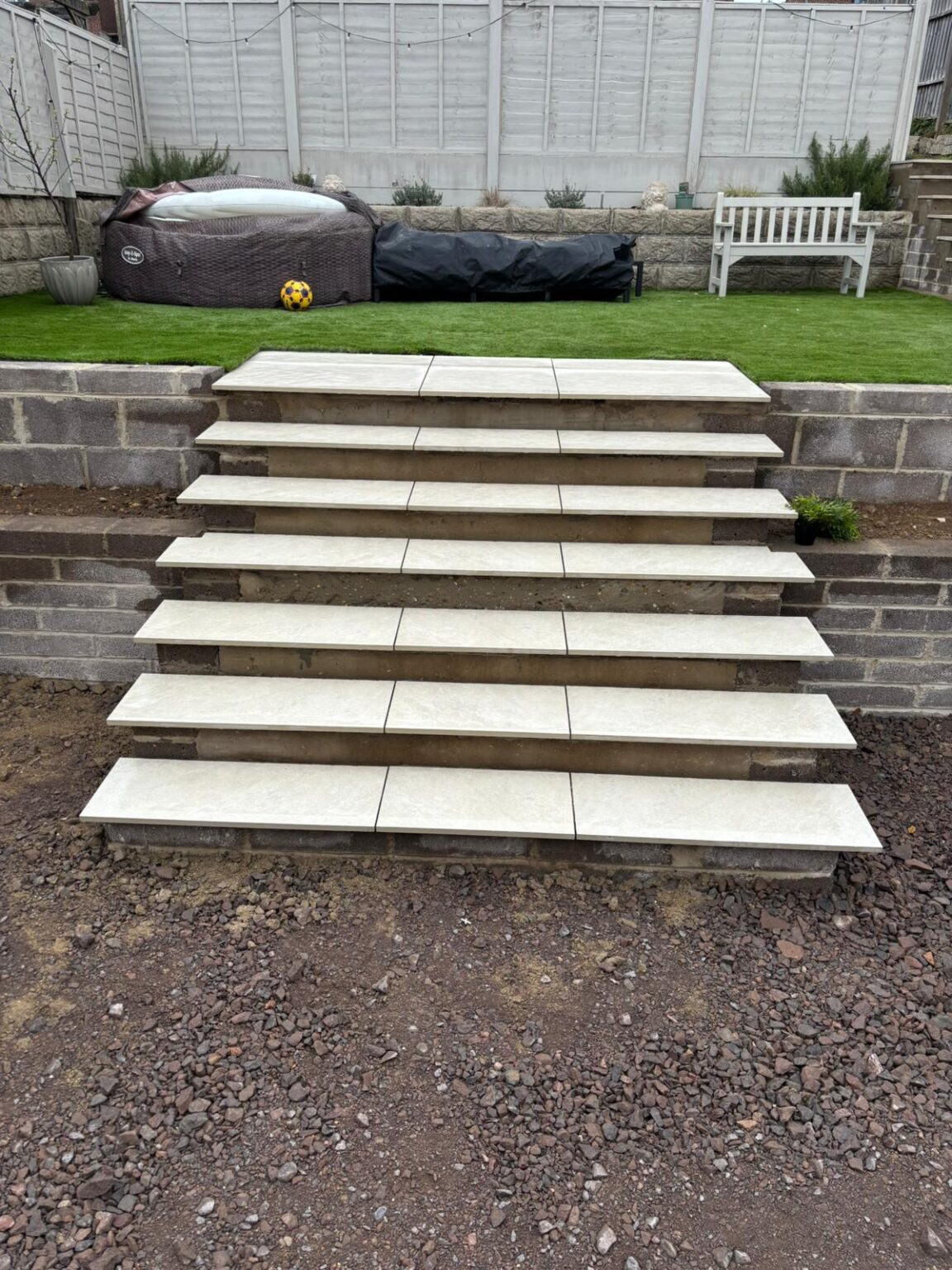
An uneven garden doesn’t have to be a problem — in fact, with the right approach, changes in level can become one of your outdoor space’s most striking and characterful features. Whether your garden slopes gently from the house or drops away steeply at the end, there are landscaping solutions that will make it safer, more usable, and far more beautiful.
At CHS Landscapes, we work on sloping and uneven gardens across Dorset, Wiltshire, and Hampshire every week. Here’s our practical guide to the most effective solutions.
Why Uneven Ground Is an Opportunity, Not a Problem
Many homeowners see a sloping garden as a challenge to be solved rather than a feature to be embraced. But changes in level create visual interest, natural zones, and a sense of journey through an outdoor space that flat gardens simply can’t replicate. The secret lies in choosing the right solution for your gradient, garden style, and budget — and executing it well.
As a general rule, any slope of more than 3° benefits from some form of structural landscaping: either steps, terracing, retaining walls, or a combination of all three.
Natural Stone Steps
For a timeless, elegant solution that only improves with age, natural stone steps are hard to beat. Sandstone, limestone, and granite all weather beautifully in the UK climate, developing a patina that makes them feel like they’ve always been part of the garden. They integrate naturally with planted borders and require very little maintenance once they’ve been properly bedded on a solid sub-base.
Natural stone is particularly well suited to traditional, cottage, and period gardens — though a well-chosen pale limestone or granite can look equally at home in a contemporary scheme.
Sleeper Steps
Railway sleepers — either reclaimed hardwood or new softwood — have become one of the most popular choices for garden steps in recent years, and it’s easy to see why. They’re bold, practical, and versatile, working well in everything from contemporary urban gardens to relaxed naturalistic spaces.
Sleeper steps are straightforward to install across a wide run and are particularly cost-effective where the staircase needs to be wide. They also pair beautifully with planting that can soften the edges over time.
Terraced Retaining Walls
Where a garden drops steeply, a single flight of steps may not be enough. Terracing — creating a series of flat levels held back by retaining walls — transforms a steep slope into a sequence of usable, plantable spaces. Each level becomes its own garden room, opening up possibilities for seating areas, vegetable beds, lawns, or planting borders that a steep slope simply couldn’t accommodate.
Retaining walls can be built in brick, natural stone, block, or timber sleepers depending on the style you’re after. Dry-stone retaining walls have a particularly beautiful, organic quality and can be planted with alpines, ferns, and creeping plants in the joints.
Gravel Ramps and Paths
Not every slope needs steps. For gentle gradients — particularly in kitchen gardens, allotment areas, or where wheelbarrow access is needed — a well-graded gravel path with timber edge restraints can manage a slope perfectly well without any steps at all. Gravel also drains freely, which helps prevent waterlogging on slopes during heavy rain.
Getting the Proportions Right
Outdoor steps that feel comfortable to use aren’t just about aesthetics — proportion is everything. The standard formula used by landscape designers is:
2 × riser height + tread depth = 650mm
In practice, this means a 150mm riser pairs well with a 350mm tread. As a guide, garden steps should always have a riser between 100mm and 175mm and a tread depth of at least 350mm — ideally 450mm or more for a generous, unhurried feel.
One of the most common mistakes we see in DIY garden steps is making them too narrow. A step that feels generous — 1.2m to 1.5m wide — invites you through the garden naturally. Narrow steps feel like a reluctant afterthought.
Materials to Consider
The right material depends on your garden’s style, your budget, and how much maintenance you’re willing to take on. Here’s a brief overview:
- Natural stone (sandstone, limestone, granite) — premium look, very durable, low maintenance. Best for traditional and period settings.
- Porcelain paving — contemporary, almost zero maintenance, wide range of finishes. Well suited to modern gardens.
- Hardwood sleepers — bold and informal, good lifespan of 20–30 years. Works in contemporary and naturalistic schemes.
- Brick — classic and versatile, especially good where it ties in with the house. Mid-range cost.
- Concrete block — functional and cost-effective, good where aesthetics are less of a priority.
A Note on Safety
Steps in shaded or north-facing gardens can become slippery as algae and moss build up on the surface. We always recommend specifying a riven or textured finish for stone steps in shaded spots, or adding anti-slip strips to smoother treads. A step that looks beautiful but becomes a hazard in wet weather isn’t doing its job.
How CHS Landscapes Approaches a Sloping Garden
Every project we take on begins with a thorough site survey — measuring gradients, assessing drainage, understanding how the garden is used and what the homeowner wants to achieve. From there, we’ll present material options and design ideas before any groundwork begins.
Sub-base preparation is where good garden steps are made or broken. A well-compacted, well-drained sub-base is what keeps steps level, safe, and looking good for decades. It’s unglamorous work, but it makes all the difference.
Once the steps or terracing is in place, we’ll advise on planting to soften and integrate the new levels — trailing plants like aubrieta and creeping thyme spilling over a step edge are one of the most charming details in any terraced garden.
Ready to Transform Your Sloping Garden?
At CHS Landscapes, we design and build outdoor steps, terracing, and retaining walls across Dorset, Wiltshire, and Hampshire. Whether you have a gentle slope or a significant drop, we’d love to help you turn it into something you can be proud of.
Get in touch today for a free, no-obligation consultation.